unique, non-traditional easter meal ideas

If you are considering breaking away from a traditional Easter dinner this year, we found some surprisingly scrumptious recipe ideas that are sure to please everyone at your table. Our recipe selection includes ideas for brunch, lunch, or dinner along with some amazing desserts to finish off your feast.

skillet-scramble1

Skillet Scramble with Kale and Garlic – great meal for Brunch

Ingredients:
1 large (10 ounce) organic Yukon gold potato
1 tablespoon butter
4 eggs, lightly whipped
4 cloves roasted garlic, thinly sliced
1/2 cup steamed, chopped kale
1/4 cup crumbled goat cheese

Directions:
Gently boil whole potato (skin on) until tender. Drain; when cool enough to handle, cut into 1/4-inch cubes.
Melt butter in a 10-inch cast-iron skillet or ovenproof sauté pan.
Turn heat to medium-low and add potatoes.
Cook slowly until golden brown, about 15 minutes. Season with salt.
Preheat broiler. Move potatoes in a pile to one side of skillet.
Pour eggs into other side and lightly scramble.
When eggs are not quite fully cooked, add garlic and kale and fold together with potatoes.
Season to taste. Top with goat cheese (or your favorite white cheese) and lightly brown under broiler.

Serves 2. Prep tip: To roast garlic, instead of cooking in oil as is the common method, put peeled, whole cloves in an ovenproof dish and cover with water. Cover with foil and cook at 375 degrees for at least one hour, or until cloves are very soft. Serving tip: Serve atop toasted whole-grain pita or naan.
Per Serving: 428 cal, 51% fat cal, 24g fat, 13g sat fat, 461mg chol, 23g protein, 30g carb, 4g fiber, 304mg sodium

more »

tom
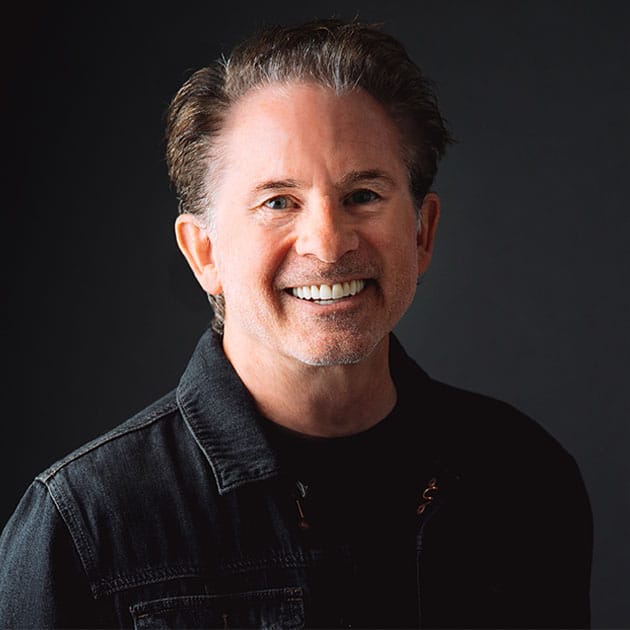
tom foerstel
president, creative team + last in, first out
april 6th, 2012 | posted by tom | people + place
Bookmark and Share

set your site on artful sustainability

alice2

We like art (obviously) and sustainability is near and dear to our hearts, so when we found this web site that combines the two, we were instantly engrossed.

“Sustainability” is one of those words that the more that it is used, the more confusing and undefined it becomes. The Lexicon of Sustainability had undertaken the deconstruction of this vocabulary and has made the overworked idea fresh and approachable again with captivating photos and playful approach.

Pop on by the web site to learn about the edible school yard project pioneered by Alice Waters fifteen years ago or the advantages of biodiversity over monoculture farming. The format–coined as information art–is addictive and you’ll be a sustainability savant in no time!

tom
tom foerstel
president, creative team + last in, first out
march 27th, 2012 | posted by tom | causes, industry trends, organic, sustainability
Bookmark and Share

dr. oz loves our clients

teeccino-labels5melt11-300x2172

Recently, two of our clients were featured on the same episode of the Dr. Oz show ” Solutions to Break Your Food Addictions.” First, Teeccino and then Melt Buttery Spread.

This is a perfect example of why we are so proud of the work we do, and the companies we do it for. Both of these clients make delicious products that help people live a healthy and thoughtful lifestyle, while contributing to a healthier planet.

tom
tom foerstel
president, creative team + last in, first out
march 20th, 2012 | posted by tom | organic, press
Bookmark and Share

farm bill cuts to organic agriculture

farm-bill-chart4

The deficit-reduction procedures adopted as part of the debt ceiling deal that became law in August 2011 have had a great impact on federally funded programs. We are in a budget-cutting environment, like it or not. The House and Senate Agriculture committees are working on cutting Farm Bill spending by $23 billion over the next 10 years.

Despite the growth of the organic food industry in the last decade, the federal budget for organic farming, research, and conservation is very small, and anticipated budget cuts will have an impact on the organic food industry.

The voice of the organic and sustainable community is making itself heard in Washington, with independent farmers and organizations submitting their budget recommendations to Congress. The National Sustainable Agriculture Coalition, one such group, provides an informative look at budget cuts and their effects. They are basically asking for restored funding to programs that spur jobs, innovation, economic growth, and sustainable development.

Read more about the Farm Bill.

admin
a a
a
march 15th, 2012 | posted by admin | causes, industry trends, organic, sustainability
Bookmark and Share

what is the future of organic farming ?

images

The upcoming 2012 Farm Bill budget cuts are threatening the growth of organic farming and the independent small-scale organic farmer is feeling the heat. Currently the Farm Bill funds the National Organic Program which provides for organic product standards, data collection, crop insurance, organic certification, organic research and assistance for farmers transitioning to organic. We are left wondering how the budget cuts will affect the future of organic agriculture.

A new report by the Organic Farming Research Foundation cites the overwhelming economic benefits of organic farming over those of conventional farming. Maureen Wilmot, executive director of the nonprofit organization, says the report is a long-anticipated review of the American scientific literature concerning organic farming in the United States. Studies compiled in the report show that the organic industry has grown from $3.6 billion in 1997 to $29 billion in 2010.  Speaking to the strength of the organic food movement is the fact that federal assistance has only been in place for the last four of those 13 years.

Some interest groups are concerned that budget cuts will endanger the organic food supply and that organic food prices will increase.  Whatever the outcome of the Farm Bill, and despite the impact that may be felt, we must remember that there is an organic revolution under way. Our world has seen the effects of processed foods and industrial farming on our health and our environment, and we are not willing to let those negative impacts continue.

Ensure the continuing strength of the organic revolution by getting involved. Sustainable agriculture needs your support. Educate yourself, and learn more about the Farm Bill budget cuts to organic agriculture. Make your voice heard, and support organic farming.

admin
a a
a
march 15th, 2012 | posted by admin | causes, industry trends, organic, sustainability
Bookmark and Share

what is the farm bill?

images-2

This broad and complex piece of legislation comes up for renewal every five years and is due to expire September 2012. The Farm Bill is a nickname for the Food, Conservation, and Energy Act and covers much more than the name implies. It allocates federal funds for conventional, organic, and industrial farming, land conservation, renewable energy, rural economic development, and nutritional assistance programs.

It is responsible for large-scale commodity-farming subsidies and crop insurance, but also includes programs that affect small-scale, sustainable farmers and organic research. The majority of the bill funds the $70 billion-a-year food stamp program, with very little allotted for organic agriculture.

The Farm Bill is not easy to understand given the various interest groups with budgets at stake, the intricacies of politics, and the complex nature of the bill. In their download, ” Farm Bill 101, “  American Farmland Trust outlines the issues covered in the bill, along with how the legislation impacts farmers of all sizes.

Learn more about the Farm Bill budget cuts and how they will affect the future of organic farming.

admin
a a
a
march 15th, 2012 | posted by admin | causes, industry trends, organic, sustainability
Bookmark and Share

The Process of Improving Sustainable Packaging

1237251269496038
Sustainable package design is certain to be a major buzz this week at Expo West. Improving the environmental friendliness of packaging is a hot topic for all professionals associated with the food and beverage industries.

As today’s consumer packaged goods companies (CPGs)  move closer to sustainability or “green” packaging, there are many factors that drive decisions, from petroleum use and government policies to sourcing raw materials, through the life cycle of the product, and all are proving to be challenging and complex.

If you missed the special report about sustainable packaging, published earlier this year by Anne Marie Mohan, editor of Greener Package, here is a recap highlighting the fundamental areas to consider before you make incremental changes to improve your packaging sustainability and scorecard.

Mohan suggests that by making small but significant changes to various components of your packaging, you can reduce environmental impact and at the same time achieve cost savings for manufacturers and consumers alike.

In Mohan’s report, she lists 10 specific areas to consider for improved packaging sustainability:

  1. Use a life-cycle approach to package design – Utilizing the LCA software tools available will help packaging designers evaluate and make better-informed material decisions.
  2. Evaluate each component of your package – Using less material without compromising the integrity of the product can help save precious natural resources. New technology is offering more options and better packaging components. As package-to-product ratio improves, so too will its carbon footprint.
  3. Consider new alternatives for distribution – Waste at the retailer level can be minimized if packagers utilize machinery and new technologies that require fewer materials to create multi-packs, bundles, and pallets.
  4. Look for opportunities to make your packaging reusable – Searching for ways to repurpose a package can reduce water, energy, and diesel consumption – all contributing to the environmental impact.
  5. Consider changes in your product – Rethinking product formulations that allow for smaller, more sustainable packaging can reduce the resources needed from the factory to retail shelf. Smaller packaging leads to less waste in our landfills, and fewer greenhouse gas emissions from transporting shipments.
  6. Whenever possible, design for recyclability – Consider new technologies such as molded-pulp packaging that allows formerly non-recycled products to be recycled. Making products easy for consumers to disassemble and recycle benefits everyone.
  7. Employ packaging strategies that encourage product consumption – Making packaging that helps the consumer use the majority of the product in the container reduces the amount of food wasted each year.
  8. Know where your packaging materials come from – With consumer demand for transparency on the rise, using non-genetically modified crops is a core value of sustainability. Using responsibly sourced packaging materials contributes to brand authenticity and loyalty, and reduces the risk for criticism.
  9. Evaluate your distribution system for space-saving opportunities – Wasted space in packaging results in excess materials, transport, handling, and storage. Maximizing load density minimizes environmental impact.
  10. Consider materials made from renewable feedstock – This is a rapidly growing area. From bioplastics made from corn or sugarcane, to packaging constructed from mushroom roots, new packaging materials and technology are emerging constantly. New technologies that promise to make packaging “disappear” are an alluring idea, but some scientific experts charge that the methodology and environmental safety factors may not live up to their claims.

While manufacturers desire high sustainability scores on their packaging, generally speaking it is not something that can be measured easily. Sustainability is not an object, or state of being, but rather a process. We can start that process with incremental change and by making better decisions that have the least impact on our environment.

Read Mohan’s full report at greenerpackage.com.

admin
a a
a
march 5th, 2012 | posted by admin | causes, industry trends, sustainability
Bookmark and Share

winter produce bounty

5159792565_0dce4493c7
We’ve collected some exceptional resources for organic, local winter produce, and put together some great tips for healthy winter eating at Organic.org, Foerstel’s organic consumer website.

Take a look!

admin
a a
a
february 7th, 2012 | posted by admin | organic, sustainability
Bookmark and Share

best and worst of 2011

Instead of New Year’s resolutions, we opted for the previous year’s recollections! We asked some of our customers and business associates to give us a short summation of their best or worst business experience of 2011. As suspected, we received some entertaining stories. With humor, wit, intelligence and insight, our contributors recollect their best and worst of 2011.


Chris Schofield and Sharolyn Rae Spruce, Owners – Schofield Design, Weiser, Idaho
Schofield Design built the Tater Truck for Foerstel’s client, Idaho Potato Commission, and their worst and best all took place during the construction of the potato truck!

11-1201-tater-truck-sm

imgp68043imgp83375imgp92015

imgp56965

Worst…
Sharolyn goes into preterm labor (six weeks early), delaying the potato truck’s first  debut

Sharolyn spent 17 days in the  NICU with little Khaya

Liam (our 2-year-old) takes a fall inside the door of the potato, going head-first onto a sharp steel plate…which led to an ER visit, three stitches and a CT scan–thankfully, he’s got a tough head like his daddy

Speaking of Chris, his ankles aren’t as tough as his head…he fell off the tater and sprained his ankle, which swelled up huge and turned black

Our dear old dog, Spud (seriously, that’s his name), died while Sharolyn was having our baby in the hospital – he was 10 years old

And the Best!…

1126111205b_0001

Our beautiful daughter, Khaya Jade, made her appearance–an unforgettable one at that

We got to build the world’s largest potato, of course – what an awesome experience!


Don Odiorne, VP Foodservice – Idaho Potato Commission, Boise, Idaho

As the oldest person in our office, I sometimes struggle with new technology. Hey, when I grew up they routinely sold new cars that got 8 miles per gallon and the news about phones included them coming in colors like avocado and princess pink. Nevertheless, I oversee our group’s website and try to keep up to date….So my best business experience in 2011, from a learning standpoint, was to sponsor and attend Camp Blogaway in Southern California. Did you know that Ree Drummond, Pioneer Woman, has a blog that generates 23.3 million views per month from 4.4 million unique visitors? From hobbyists to mommy bloggers to full-time bloggers being courted by all the major food manufacturers, they have created a different world of communicating with common themes. It’s like a new subset of “tribes” all working together toward common goals. I came away identifying who to work with, and now I partner with bloggers creating recipe videos, newspaper placement, recipe development, etc. Foerstel is working with us to create a landing page on the website to highlight links to their blogs, Twitter and Facebook. Pretty good investment for the $395 registration cost to attend camp!


Jim Hall, Sales Representative – Joslyn Morris Printing, Boise, Idaho

In the summer of 2011, we printed statement stuffers that had to be delivered to Northern California on a specific date for a utility company. Being the conscientious and hardworking company we are, we shipped the pallet of statement stuffers a week early, via 3-Day FedEx freight. A few days before the order was due, we tracked the shipment and found it was in Atlanta, on the other side of the country! The stuffers had to be reprinted and delivered within two days to meet the deadline. The original pallet arrived a week later, taking a total of 11 days to be delivered from Idaho to California. The lack of response and customer service on the part of FedEx baffled us!


Chris Jensen, Director of Marketing – Blue Marble Brands, Providence, Rhode Island

I don’t know if my stories are that interesting. There are the epic emotional ups and downs of package design, out-of-stock products, pressures of Expo West and sales goals; battling 100-year floods in Thailand in a quest to find coconut water supply; and finding a company in the Maldives that catches tuna one at a time! And there is the consumer demand for everything to be organic, inexpensive, available nationwide and grown at a small farm, etc. It’s all quite mundane.


Steven Dinoia, President and CEO – Three Sixty Packaging, Boise, Idaho

Truly the “best” of 2011 was FREEDOM (kidding). It was the spinout from Treasure Valley Packaging Solutions/Treasure Valley Business Group to ThreeSixty, LLC. Foerstel created a cool spinout demonstration for us that was amazing. That in itself really says it all – that we spun this business out successfully in a challenging year for all. And we made our 2011 budget and goals.

The other highlight for us was our partnership with Fine Line Graphics. Their High Definition Flexo process has allowed us to offer our customers excellent print quality that provides a high impact visual experience with brighter images and sharper graphics. Another success achieved!


Anthony Zolezzi, Corporate Consultant/Environmental Entrepreneur – Anthony Zolezzi, Los Angeles, California

On Christmas Day as I walked along the beach, I witnessed an interesting interaction between three young boys playing with their brand-new soccer ball, and two much older, muscular guys, easily twice the size of the three younger boys combined. The older men challenged the younger boys to a game and started the warm-up by showing off, bouncing the ball from their feet to their chests to their heads and then to each other. As the game got underway, the younger boys were unassuming and surprisingly skilled in basic get-it-to-the-third-open-person tactics, winning the game 4-0. If grace can be defined as “elegance and beauty of movement and form,” I’d say this was about as graceful as it gets.

I had to ask myself how many times we allow ourselves to be intimidated by the “jocks” we encounter in our own lives and careers? And that prompted me to make a New Year’s resolution: to keep my cool in all situations, no matter how challenging, to not be impressed by posturing or hype, but just look for that open third person whenever possible, and to try to become more graceful in my dealings with people. This was the lesson I drew from observing this spontaneous pickup soccer game on the beach and one that I am looking forward to bringing into 2012.


Giovanni Pizzigati, Creative Director – Matitegiovanotte, Forli, Italy

Matitegiovanotte, Foerstel’s sister design firm in Italy, contributed a delightful story about having the opportunity to judge the packaging for Panettone - a traditional holiday dessert. The event ended up being a wonderful combination of great food, wine and time with friends! Here is the story in Giovanni’s own words:

The Keepers of the Panettone, A Venture Between Design and Gastronomy
Beginning of November, I received an email from the secretary of Italian Art Directors Club, asking me if I am interested to join, as a graphic designer, of the jury which will award the packaging for Panettone, a traditional sweet of Christmas.

the-confectioner1

I accept with enthusiasm, and soon I am contacted by the organization of King Panettone, a marketplace of artisan panettone. Stanislao Porzio, an advertising executive with a passion for cooking, has invented and produces from four years with great success (in two days was visited by nearly 15,000 people). Stanislao, therefore, calls me and explains that along with an industrial designer and the CEO of the trade association of industrial packaging, we judge the aesthetic value, innovation and environmentally sustainability packaging.

contenders1

The appointment is at 2 pm on Saturday, November 26, in Milan in a former factory turned into a center for events. Well, I found it, judging a score of interesting packages including two made with a special edible “paper,” orange or kiwi fruit’s flavored, but this is the “institutional” task. Think now you are in the presence of nearly 40 artisan bakeries that produce both the traditional and infinite variations (including pineapple and olives!) and that offer tastings, add in the presence of a consortium of producers of wines that with a modest cost allow repeated sampling of wines, a couple of nice cronies of the jury, and you have a nice idea how continued the afternoon.

Reluctantly I returned in the evening in my town, taking with me (as well as a pleasant memory), a great cake and the proposal to return to the jury again next year!

admin
a a
a
january 31st, 2012 | posted by admin | people + place
Bookmark and Share

stepping back in time…75 years

What could be an innocuous publication—the annual directory of shippers and processors for Idaho Potato Commission—went back in time this year for the 75th anniversary edition. We coupled beautiful farm and field photography with photos portraying a day in the life of growers, shippers, and processors, giving the directory a fresh approach to listings, potato varieties, brands, and Julian dates. Never before has a directory had such…“good taste.”
ipc_12-01_-directory-cover-lo1ipc_12-01_directory-spread-1-lo1ipc_12-01_directory-spread-3-lo1ipc_12-01_directory-spread-4-lo1

admin
a a
a
january 16th, 2012 | posted by admin | fresh
Bookmark and Share
View Older Posts »
« View Newer Posts